| |
| US-based journal examines RSS’s ‘infiltration’ within Indian institutions |
| |
| |
 |
| |
| |
| Online Desk: A scholarly article has examined the growing influence of Hindu nationalist vigilante groups within India’s institutions. It argues that their links with state authorities threaten democracy and the rule of law.
The article, titled “The Making of a Hindu Nationalist Deeper State in India: Vigilantism Against Democracy,” appeared in the journal Indian Politics & Policy (Spring 2026). Its author, Christophe Jaffrelot, examines the Rashtriya Swayamsevak Sangh (RSS) and affiliated organisations.
The article describes an emerging “deeper state” linking official institutions with grassroots Hindu nationalist networks. It argues that these networks can sustain ideological influence beyond electoral politics.
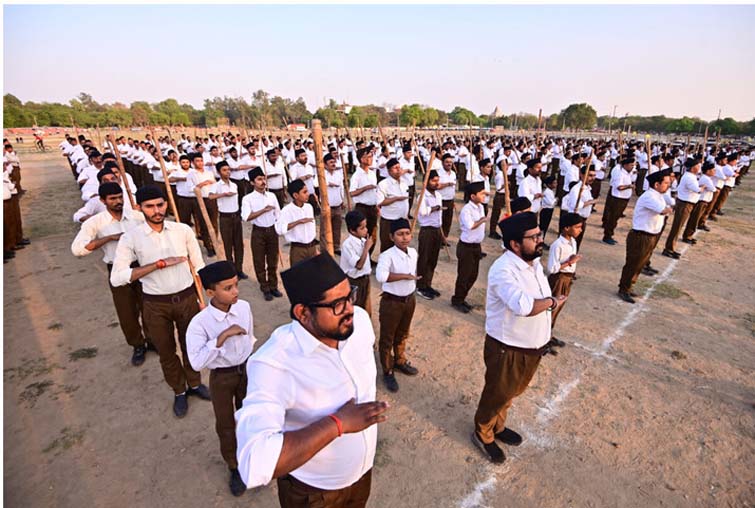
Jaffrelot traces the RSS’s organisational expansion to its founding in Nagpur in 1925. He examines its local branches, known as shakhas, and their role in spreading Hindu nationalist ideology.
The article focuses particularly on the Bajrang Dal, established in 1984. It examines vigilante campaigns involving cow protection and alleged “love jihad.”
The author argues that such activities extend beyond spontaneous mob violence. He describes them as organised forms of social and cultural policing.
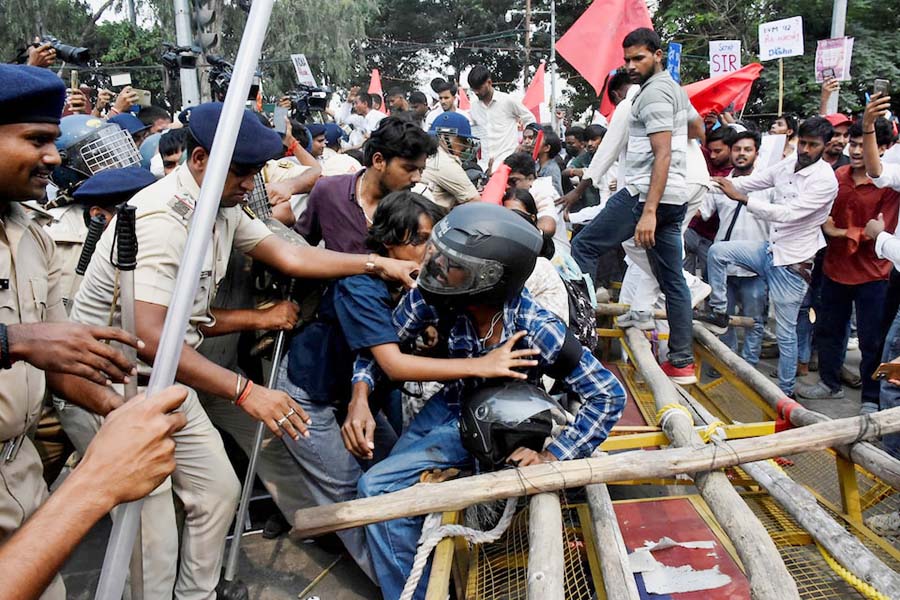
The article discusses attacks on Muslims and other minorities. It also examines campaigns targeting interfaith relationships and religious conversions.
It says vigilante groups have sometimes used coercion and violence. Such actions, the author argues, can enforce majoritarian social and religious norms.
Alleged links with state institutions
The article examines the relationship between vigilante groups and state authorities. It argues that these links have deepened under Bharatiya Janata Party (BJP) rule, particularly since 2014.
Gujarat and Haryana feature prominently in the analysis. The author cites reported cooperation between police and cow-protection vigilantes in Haryana. He also discusses the recruitment of RSS and Bajrang Dal members into Gujarat’s Home Guards.
The article cites a Karnataka BJP legislator’s claim about RSS-linked recruitment into police ranks.
According to the article, such connections blur boundaries between state institutions and non-state actors. It argues that this can weaken accountability and undermine impartial law enforcement.
The author also examines instances of political support for accused vigilantes. These include former Union minister Jayant Sinha’s controversial garlanding of men convicted in a lynching case.
Accountability under scrutiny
The article argues that electoral changes alone may not dismantle entrenched ideological networks. Their influence, it says, can persist through local organisations and institutional relationships.
Jaffrelot warns that cooperation between authorities and vigilante groups threatens the rule of law. It can also allow violence to escape accountability, according to his analysis.
The article concludes that democratic institutions require effective oversight and impartial enforcement of laws. It stresses the importance of preventing ideological networks from exercising power outside constitutional safeguards.
The study presents these developments as a challenge to India’s democratic framework.
|
| |
|
|
|
| |

|
|
Chief Advisor: Md. Tajul Islam,
Editor & Publisher Fatima Islam Tania and Printed from Bismillah Printing Press,
219, Fakirapul, Dhaka-1000.
Editorial Office: 219, Fakirapul (1st Floor), Dhaka-1000.
Phone: 02-41070996, Mobile: 01720090514, E-mail: muslimtimes19@gmail.com
|
|
| |
|